Friday, June 29
Thursday, June 28
FMR
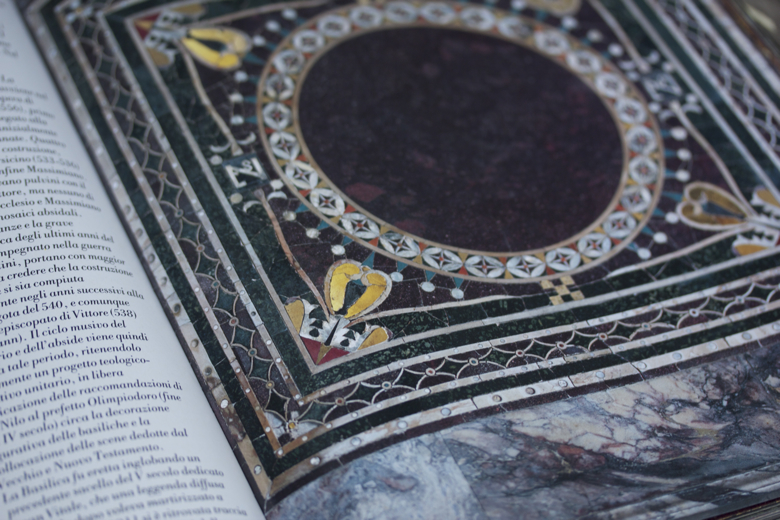
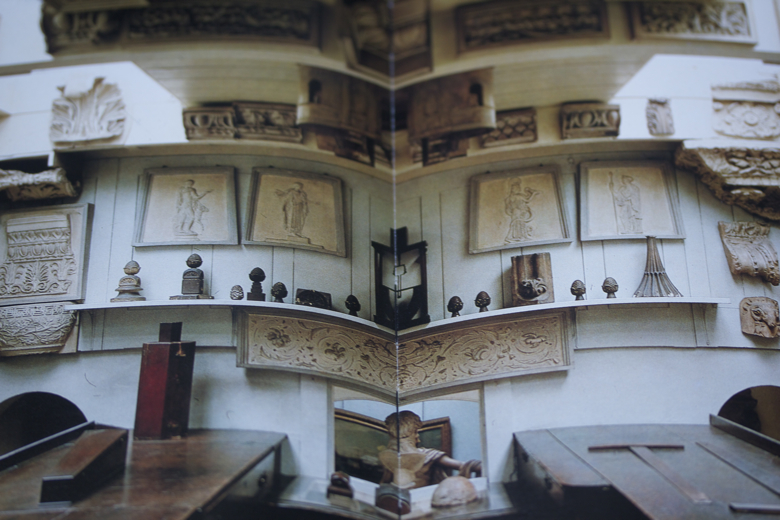
Named after one of Italy's most distinguished publishers Franco Maria Ricci, FMR arts magazine was printed bimonthly in Italian, English, German, French and Spanish. Exquisite photography, signature black backgrounds, and beautiful renderings, it is a mystery to us how Ricci accomplished such perfection prior to the the digital age. Based in Milan, and only available by subscription, the magazine enjoyed a short life during the 1980s and a cult following ever since.
Franco Mario Ricci studied geology and began his career with Gulf Oil. He later opened a graphic arts studio and started his legacy of trademark design for numerous brands. He designed: posters, catalogues, calendars, and books; leading him towards a career in publishing. In an interview with designboom, in 2001, Ricci claims to know nothing about design or publishing and is not interested in what others are doing. We love his attitude, initiative and perspective; we strive towards his model, inspired by his declaration of what is noteworthy. Below are some of his thoughts on FMR and the "panorama" of contemporary arts publication.
fmr 20 years ago was because I realized that there was a good sex magazine:
playboy, a good fashion magazine, vogue, good in the sense that they
carried out their tasks with dignity. but there wasn't a good art magazine.
all of the magazines were filled with news, gossip, faces, small photos.
art was humiliated.
so I decided never to show anyone's face.
I decided to publish monographic articles, so if I decide to do an article
about the cathedral of parma, I show 30 pages on the cathedral, not just
two photos and a short article...
I try to use high-quality images with simple, readable texts
which are high quality, not accounts of gossip, so my magazine is
completely different from the others...
which are high quality, not accounts of gossip, so my magazine is
completely different from the others...
I don't want to teach art history, I want people to become accustomed to seeing the
beauty of art. I wanted my magazine to become a sort of school for taste,
for showing that the world is full of beautiful things.
beauty of art. I wanted my magazine to become a sort of school for taste,
for showing that the world is full of beautiful things.
Wednesday, June 27
ALEXIS TAYLOR
Alexis Taylor is an actor, singer and director. She just returned from Montreal where she played Bobbie in the acclaimed musical, Haunted Hillbilly. We saw the production in Toronto last summer and were taken with both the premise and performances. Based on Derek McCormack's book, with music by Matthew Barber, the play chronicles: a Hank William-esque character's rise to country stardom, the gay vampire who styles his wardrobe and the women who get caught in the crossfire. Alexis was both hilarious, and vulnerable as "the other woman".
While Taylor's skills as an actor and singer are undeniable, I'm also keen to see where her work as a director takes her. She has an unassuming confidence, savvy wit and innate charisma that creates an environment that is both professional and engaging. There aren't many who do, but I think that Taylor has a feature film in her, awaiting its moment.
Tuesday, June 26
DUNDURN CASTLE
In the mid nineteenth century, Dundurn Castle was the place
to be. Picturesquely situated on the banks
of Lake Ontario, Sir Allen MacNab’s former residence is really a regency style villa but was called “castle” by the citizens of Hamilton. Completed in 1835 by the young architect Robert
Wetherall, Dundurn is built around the brick shell of Colonel Richard Beasley’s home and
several structures from the war of 1812.
Perhaps these constraints impeded the architect’s plans as the proportions
of Dundurn seem a bit strange. Oddities
abound on the grounds, including the “mystery building” which is now thought to
be a cockfighting pavilion, rumors of secret tunnels and, of course, the ghost.
The city of Hamilton purchased the castle in 1900 and has
lovingly restored it to 1855 era furnitings.
Complete with costumed staff, working kitchen, lush gardens, and
upcoming war of 1812 bicentenary events, Dundurn makes for an entertaining and
educational visit.
Monday, June 25
STINGING NETTLE
Stinging nettle is a remarkable plant. Unattractive, and abusive to those who try to pick it, don't be thwarted, it's medicinal properties will reward your efforts ten-fold. Nettles can be used to treat ailments as diverse as: arthritis, gout, bronchitis, seasonal allergies, hives, asthma, MS, sciatica, kidney stones, excessive menstruation, urinary tract infection, enlarged prostate, hair loss, dandruff, acne, eczema, fatigue, anemia, celiac disease, gingivitis, and much more! It lowers blood sugar, cleanses the system, promotes lactation and is an antioxidant. Kassie Vance has written a very comprehensive article on stinging nettle complete with a full list of its many uses, recipes and clinical studies. You can find it on Dr. Christopher's Herbal Legacy.
I regret missing out on eating the iron-rich young leaves in spring (after cooking to remove the sting) as the mature leaves are inedible. These older leaves can be dried and made into a tea for consumption all year round - it tastes pretty good too. I look forward to experimenting with this common plant and feel lucky it decided to make my yard its home.
Sunday, June 24
ETRUSCAN SOUVENIR
While touring around Tuscany I came across many Etruscan historical sites and museum displays. The Etruscan civilization flourished between 800 and 500 BC, preceding the Romans and giving Tuscany its name. The Etruscans admired Grecian Black-figure pottery so much, that they started making it themselves. And so begins the long line that brings us to this souvenir vase. What I like is that, although it's a copy of something that's been recreated ad infinitum, it was probably made using the same techniques as a thousands of years ago. That is, aside from the glued on sand to make the vase look freshly excavated. When and where is this souvenir from: a tourist shop celebrating a tomb found in the 1980s, a museum gift shop from the1970s, or a market stall from the 1890s? At 15 EU from a back-alley antiques market it doesn't really matter, it's a nice reminder of a beautiful land, its rolling hills untouched by history.
Friday, June 22
COLOUR BLOCK
For the last seven hundred years in the town of Orvieto, a yearly procession takes place on the Sunday of Corpus Christi. This event celebrates the miracle of Bolsena; in 1263 a wandering priest, doubting his faith, celebrated Mass at St. Christina in Bolsena. At the moment of consecration the Host (wafer) bled onto the alter cloth, revealing it's true nature as the Body of Christ. This stained linen cloth is the climax of the procession, beautifully preserved in a reliquary and carried under a canopy.
I was lucky to happen upon this event and was quite taken with the historical parade that preceded the sacred procession. Our current throw back to the colour block styles of the 1990's could take a page from these early renaissance gentlemen.
Subscribe to:
Comments (Atom)