Tuesday, April 29

MAGGY PERRY : PARIS APARTMENT


Maggy Perry once owned the Fountain Bar at Dundas and Ossington.  Her easygoing charm created a welcoming and inclusive environment spawning Sunday dinners and a host of regulars.  While she was building her business, she was also falling in love with a Parisian.  They've since gotten married, moved to Paris and are expecting their first child.  

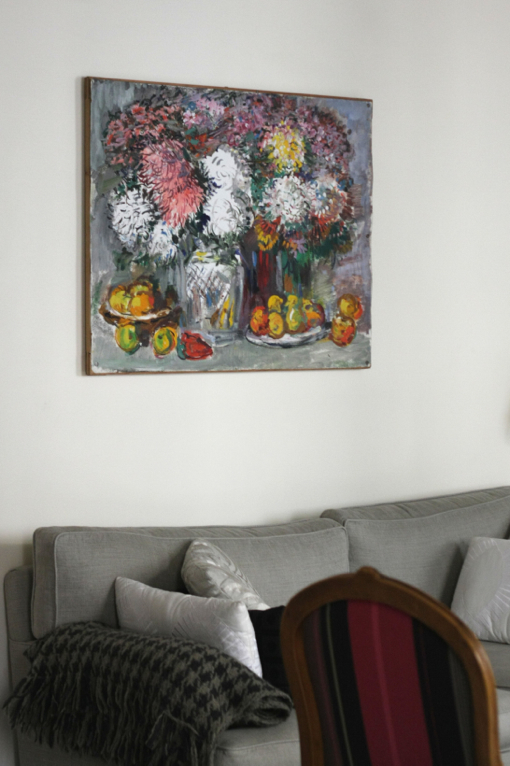
Maggy's mother-in law is a true Parisian lady and I've enjoyed hearing about the places and experiences that they have had together - my favourite being their trip to Drouot (the Paris auction house) to buy a marble table for 20 EUR.  This past Friday, Maggy was my guide into this multiroom megaplex of auctions.  We didn't end up buying anything (I did leave with a better grasp of French numbers and a few regrets) and ended our visit at her mother-in law's beautiful apartment in the Marais district.  Many of the antiques and paintings came from auctions and fit beautifully in among the exquisite drapes, wood beam ceilings and completely deceiving silk flowers.



I highly recommend visiting Drouet auction house even if you're just visiting Paris briefly (and you like auctions).  The facade and lobby are a little intimidating but once inside, the atmosphere is casual yet charged just like a Southern Ontario farm auction.  There are video screens above the auctioneers updating where the bidding is at in multiple currencies so even if your French isn't great you can still follow along.  The website offers a complete virtual tour of the rooms a day before each auction so you can research what takes your fancy.  You don't need to register to buy, one of the assistants will take your cash or credit card during the auction.  Everyone seemed to know each other and the regulars were hanging out afterwards, lamenting or celebrating their scores.


Monday, April 28

STATUE OF LIBERTY : THE MAKING OF

The Statue of Liberty (Liberty Enlightening the World) was a gift from France to the United States to commemorate the centennial of the War of Independence.  The monument by Frédéric Auguste Bartholdi is a remarkable feat of engineering.  Prior to tackling the 151' tall masterpiece, Bartholdi first made three smaller versions, gradually grading them larger and adjusting the design as problems presented themselves.  His final maquette was 1/4th the scale of the final and from this a plaster copy was made using painstaking calculation.  From this plaster model, a wooden mould was created that was then used to hammer the 3/32" thick copper plates into shape.  Gustave Eiffel, the renowned bridge builder and namesake of Paris' most famous landmark was commissioned to create an internal structure to support the copper skin, allowing for the strong winds in New York Bay, and fluctuations in temperature.

The Americans undertook the making of the pedestal and both projects saw considerable difficulties in funding.  Although the statue was completed 10 years later than the centennial, it was received with considerable pomp and remains to this day a symbol of liberty, immigration, hope and fraternity between nations.  You can learn more about the construction here.  You can see photos of the construction here.

These two dioramas from the Musée des Arts et Metiérs show the making of the full scale plaster model and the construction of the copper skin.


Friday, April 25

LESAGE EMBROIDERY


As part of my residency in Paris, I enrolled at the Ecole Lesage. New skills, (specifically the use of the luneville hook), were the goal, however it was also a pleasure to partake in the history of Paris' most famous embroidery house:

Lesage is the first name in couture embroidery.  Started in 1924 by Albert Lesage, the firm quickly established itself working for Schiaparelli, Chanel and Vionnet. As other embroidery ateliers closed, it was Albert's son, Jean François, who gave the name Lesage staying power and international renown by creating cutting edge looks with top designers including Balenciaga, Givenchy, Dior and Christian Lacroix. Lesage was sold to Chanel in 2002 as part of Chanel's mandate to maintain skills within Paris by acquiring and supporting  small ateliers.  Jean François Lesage was awarded the Maître d'Art a week before his death in 2011.


I first visited Lesage in 1998 as a fashion student with Ryerson University.  We were shown design cards dating back to the time of Schiaparelli and current work underway for John Galliano and Alexander McQueen.  The precious nature of embroidery has been diminished by the prevalent use of automated machinery; a fully patterned sequined dress can be mass produced for a reasonable price. However, the delicate and layered embroidery happening at Lesage carries a subtlety, quality and artistic flair unachievable on a mass scale.

If you are interested in attending one of the beginner courses at Ecole Lesage, available in both French and English, do not be daunted if they do not reply to your email requests for an appointment.  After three attempts I just went and knocked on the door and they signed me up.  The teachers were very personable and the more advanced work going on around me was an inspiration.  One of the instructors, Annie Penin, travels to Montreal and NewYork regularly to bring her knowledge from Lesage to a North American audience, you can find out about her courses here.

The photos below show the traditional method for stretching fabric for embroidery, the luneville hook (like a tiny crochet hook, used to attach sequins and beads), practicing chain stitching and the finished project.


Tuesday, April 22

GULDAGERGAARD MANOR HOUSE


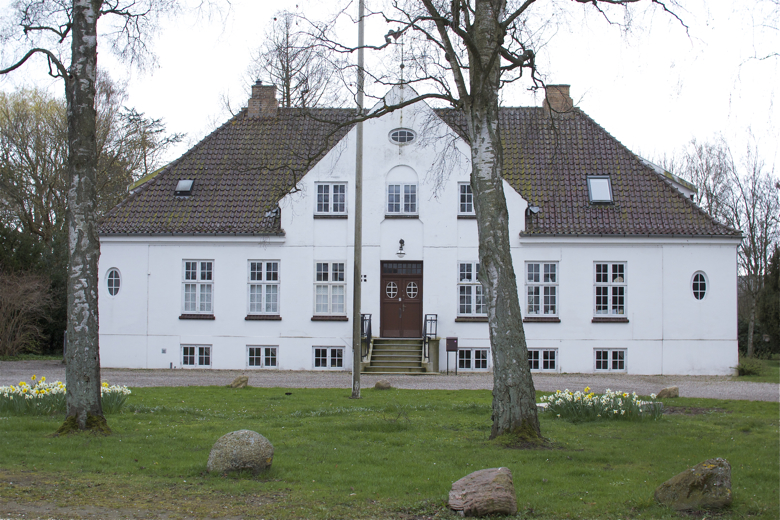
Once a tulip farm and apple orchard, Guldagergaard (pronounced Gool-aya-goh) translates to Golden Acre Farm in Danish.  The manor house was the home for the family until 1990 and was kept in traditional style while incorporating contemporary Danish design.  The estate is now a public park and around 1996 the manor house and outbuildings were converted into an international research centre for ceramics -- I am currently a resident here.  On the grounds are also an extensive kiln park (8 different outdoor wood firing and gas kilns), the studio facilities, the Apple House gallery and  sculpture garden.


The coffee table in the living room is decorated with ceramic tiles depicting the estate during its early years as a farm, and some of the surrounding features such as a beach (approximately 3km away).


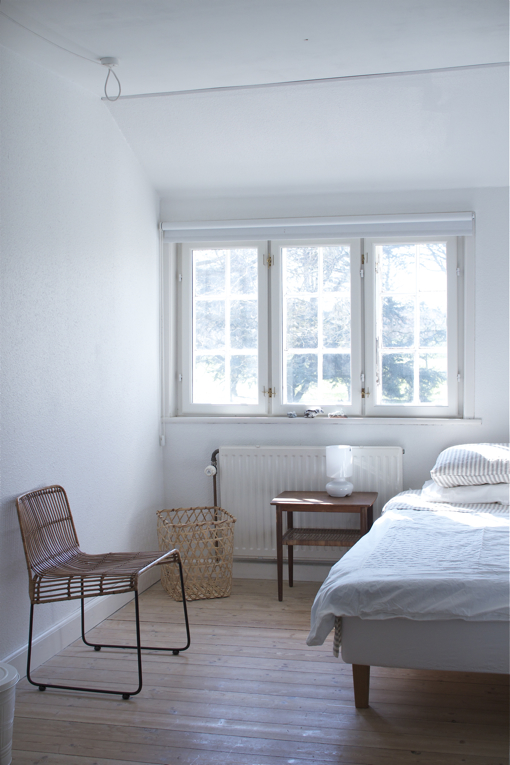
The house accommodates up to 12 artists with 10 shared and private bedrooms, 3 bathrooms, large shared kitchen, dining hall, and library/living room.  I love my little minimal bedroom.  The manor acts as a meeting place for all those involved with the centre and houses the staff offices. Bicycles are available to us for touring around the small sea-side town and on the countryside paths.  I've really been enjoying hanging my clothes out on the line and using the linen roller in the laundry room.  You will also notice pieces from the Guldegergaard collection throughout the house (guest artists are required to donate a ceramic work).  


The view from my bedroom window is a large sculpture piece by UK ceramics celebrity Paul Scott.


Living here is very much a communal environment.  Each night 1 or 2 residents cook dinner for everyone and we eat together in the dining hall.  Many artists staying here at the moment are working as assistants for their accommodations.  In exchange for working 4-5 hours at the centre (cleaning, studio maintenance, yard work, Guldagergaard ceramic projects, etc.) artists can stay without the fees.  I was nervous about the communal living vibe, but this place has really positive energy, it's so comfortable, and everyone here is so great. I love it. 

Check in on Thursday when I post about the studio facilities.