Friday, May 31

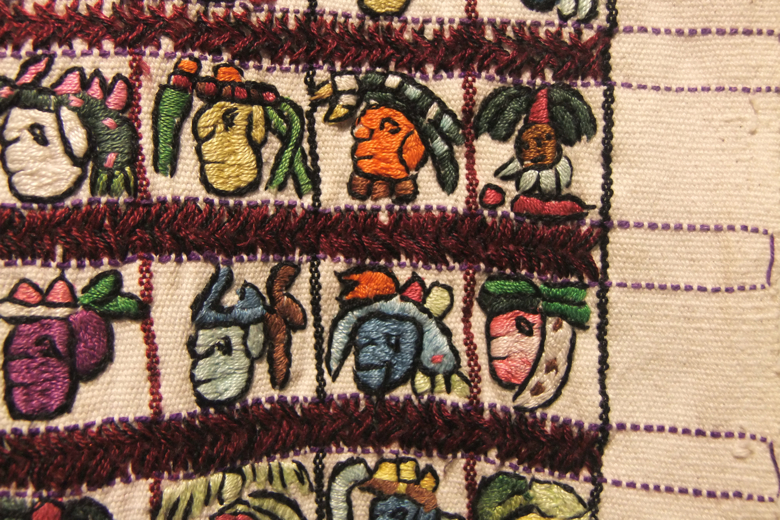
ANCESTRY AND ARTISTRY : MAYA TEXTILES FROM GUATEMALA

If you're looking for a little inspiration for your summer wardrobe, head to the Textile Museum of Canada where an expansive exhibition of Maya textiles speak of warm days surrounded by lush nature.  These traditional garments, often handwoven and embroidered, are still worn by the highland Maya people of Guatemala, alongside more modern garb.  Many of these traditional styles have permeated fashion trends, to be recreated for the mass market using machine embroidery.  Nothing can compare to the subtle expression of a hand embroidered piece and you might leave yearning to pick up a needle yourself.


Thursday, May 30

ELIZABETH FRITSCH

Saxophone and piano duo, 1978
Hand-built, painted with matt coloured slips
Victoria Albert Museum


Elizabeth Fritsch (b 1940) is a British ceramic artist, celebrated for her precise and often mind bending hand-built objects.  After studying harp and piano at the Royal Academy of Music, it is little wonder that the influence of music resonates through her practice as a potter, apparent in repeating patterns evoking tempo and rhythm.  Fritsch describes her objects as "inhabiting the shadowy space halfway between two and three dimensions". She effects this phenomenon by flattening surfaces using matt coloured slips and distorting perspective with line and shade.  

These two vessels caught my eye at the V&A Museum.  I realize we post quite frequently about our discoveries from this collection, but there is just so much to engage with and study.  In the past, I would breeze by the contemporary portion of the ceramics 6th floor corridor to get to what I had once valued more.  On my most recent visit in November I made sure to spend some serious time with the contemporary collection, seeing here artists laying more value in expression over traditional methods and functionality. Fritsch's work stood out amongst other lauded ceramic artists.

Wednesday, May 29

ALEX LEVINE

As the sun set on a warm night in the city I found myself privy to hatching plans for television pilots.  Alex Levine, screenwriter, was meeting with an associate from his former career as a lawyer to discuss creative ideas for upcoming projects.  I was meeting with said associate's wife to discuss, among other things, the setting sun.  It's always exciting to be around the genesis of an undertaking, an electricity permeates the air. After writing for shows including Flashpoint, the cult hit Stargate SG-1 and his latest project Orphan Black, Levine is well equipped to turn rambling talk into reality.  I anticipate seeing what now must remain shrouded on the small screen in the near future.

Tuesday, May 28

COMMERCE COURT NORTH


Doors Open Toronto, held last weekend, is a bittersweet event.  It is a pleasure to skulk around interiors where you wouldn't usually be expected, however, everyone else is doing the same thing, making for line-ups and congestion.  We headed to Commerce Court North, completed in 1931, hoping to see the massive deco head sculptures on the 32nd floor observation deck.  This balcony has unfortunately been closed for many years. Undaunted, we inspected the miniature heads in the above model.  The faces are meant to evoke the characteristics of the bank: Courage, Observation, Foresight and Enterprise.  

The lobby did not disappoint. 715 ounces of gold leaf decorate the ceiling, accented by gorgeous deco chandeliers.  There is something very earnest and charming about the flora and fauna peopling the carvings, and details.  Perhaps a Hogwarts set was not what they were going for, but all this marble certainly instills more trust than a green easy chair. 


Monday, May 27

BEMBO


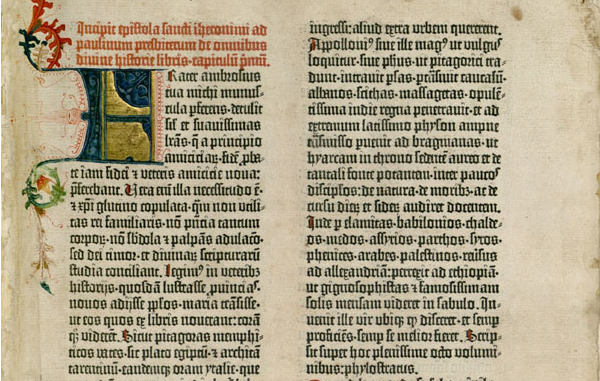
These pages are from the Hypnerotomachia Poliphili (Poliphilo's Strife of Love in a Dream).  Published in 1499, it is a remarkable example of early printing, featuring refined woodcuts, innovative layout and a surprisingly clear and modern looking font.  Most printed books from this time used a Blackletter typeface to imitate handwritten calligraphy.  Look at the difference here.   This book was created by humanists, looking to ancient Roman writing, and in doing so launching future traditions in typography.  First created by Francesco Griffo for the De Aetna by Pietro Bembo in 1496, the font was perfected for the Hypnerotomachia.  In 1929 Stanley Morison re-released the typeface as Bembo, which is still used today.  

One of the great mysteries surrounding the Hypnerotomachia is why such a legible font should be used for such an intentionally confounding book.  Written in many languages and dialects,  there is conjecture that the romantic story about the quest for love in a dream is simply a scaffold for an elaborate series of codes and riddles.  Popular culture has taken up this baton, the book appearing in Polanski's 1999 film The Nineth Gate and more recently in the novel The Rule of Four.  Dan Brown acolytes aside, Carl Jung saw great value in this book as it successfully illustrated human archetypes translated into the dream state.  See for yourself the surreal journey that Poliphilo takes here


Images from Wolfenbütteler Digitale Bibliothek  http://diglib.hab.de/wdb.php?dir=inkunabeln/13-1-eth-2f

Sunday, May 26

CHRISTIE ANTIQUE SHOW


The sky was cloudless and wind brisk for the Christie Antique Show, held twice yearly (May 25 and September 7) outside of Hamilton.  The people came out in droves to view the wares and from what the dealers were saying, the field was considerably emptier by closing time.  Constant antiquing can lead to seeing the same unusual objects reappear at different events, however it is the novel, the beautiful and the deals that keep us coming back time and again.