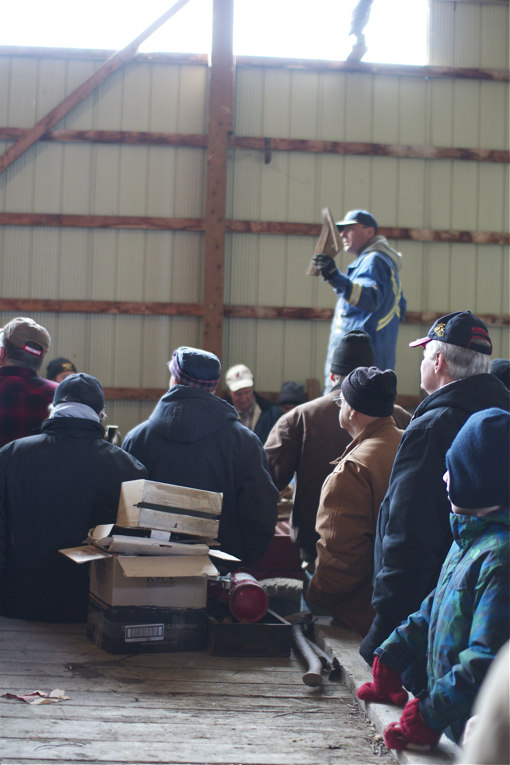
There is cold and then there is the deep-freeze that sets into an unheated metal building as February rolls around. The auction fever is perhaps the only heat that can spark a body to stand for hours on end in such a place with no paycheque in sight. I didn't end up buying anything but the assembled company left memories enough and the french fries were hot and crisp.
Sometimes referred to as Field Mustard, I had always thought the
fields of yellow I saw in Canada were exactly that, mustard. In fact,
it's Canola. Perhaps you knew this already and I'm a bit slow to identify
this popular cash crop... When touring around Skælskør, or on your way to
one of the surrounding towns of Borreby, Næstved, or Slagelse, the Danish rural
landscape at this time of year is a stunning blanket of yellow.
Canola oil is produced from the crushing of the rapeseed. The
word "rape" in rapeseed comes from the Latin word rapum
meaning turnip. Turnips, rutabaga, cabbage, brussel sprouts, and mustard
are all related to the two natural canola varieties commonly grown, which are Brassica
napus and Brassica rapa. The Danes use this literal
translation Rapsolie (rapeseed oil). Since canola was bred
naturally from rapeseed at the University of Manitoba by Keith Downey and
Baldur R. Stefansson in the early 1970s, and most likely disproving of the
alternate meaning of the word "rape", the plant and oil product was
retitled canola (the "can" standing for Canada and "ola"
oil). Some dictionary sources state that Canola stands for
"Can(ada)+o(il)+l(ow)+a(cid)" as this plant was engineered to have a
different nutritional profile and much less erucic acid.
Brassica oilseed has a long history of being cultivated dating back 4,000 years in India, 2,000 years in China and Japan and in 13th century Northern Europe. Primarily produced in small quantities as fuel for oil lamps, its use was limited until the development of steam power and the discovery of its use as a lubricant. During WWII when this product became in high demand, Canada began to expand its limited rapeseed production as the war blocked European and Asian sources of rapeseed oil.
After the war, however, the demand sharply declined and Canada began to look for other uses for rapeseed. In 1956-57 rapeseed oil extracts were first put on the market as as food products. This was not successful due to the disagreeable greenish colour, a high concentration of erucic acid and a distinctive taste. Hence the breeding of canola from rapeseed in the early 70s.
Originally a trademark, canola is now a generic term for edible
varieties of rapeseed oil in North America and Australia. Once considered
a specialty crop in Canada it's now a major American cash crop. Canada
and the US produce between 7 - 10 million tonnes of canola seed per year. Annual Canadian exports total 3 - 4 million tonnes of seed, 800 000
tonnes of canola oil and 1 million tonnes of canola meal. Canada rates
2nd for top rapeseed producers in the world, after the European Union in 1st.
Denmark rates 16th in the world only 4 countries after the US at 11th
place. That is a lot of rapeseed production in Denmark considering how
small this country is. Who knew canola could be both so beautiful and mildly interesting.
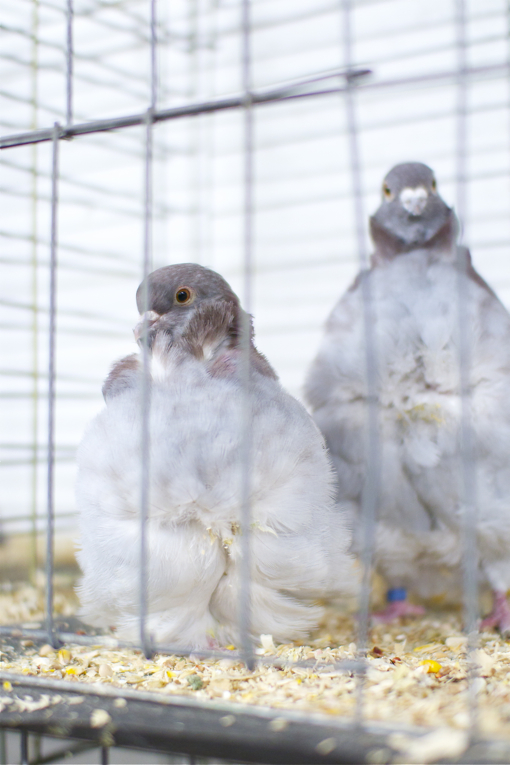
The weekend before I flew to Paris, my family and I went to a bird market near Woodstock, Ontario. My mother was interested in looking at a couple of chickens to add to her coop. The poultry selection was quite limited as this market was primarily focused on pigeons; some extremely common (to us who live in Toronto) and some more decorative. There were a couple tables dedicated to more exotic house birds, and a little furry guy (who you'll see below).
What I found most interesting was the crowd of collectors: all men, mostly retired, sporting ball caps and sneakers, driving dated sedans, and from various cultural backgrounds. It doesn't show in these photos, but I noticed a community of East Asian amongst Portuguese and Italian Canadian. The vibe felt more like a club meeting than a market place; men discussing the specifics of their shared hobby and drinking coffee (some speaking quite passionately with a bird in each hand). A bit like our Sunday mornings spent at the St. Lawrence market where we casually peruse the antiques, chat with dealers and meet our friends at the snack bar.
While I observed the bird people back home, Heather had her own experience at a Parisian bird market. Scroll down and read on to compare.
The Paris Bird Market is held every Sunday at Place Louis Lépine on the Ile de la Cité. The site has been in use since 1808 as both a flower and bird market, with wares being sold from elegant green steel pavilions amid an avenue of trees. Birds are perhaps not the popular pet they once were, but in among the tourists freaking out over baby ducklings, people were buying cages and birdseed (I didn't see any actual birds sold). It's depressing to see these bright creatures crammed together into tiny cages, yet they are fascinating and beautiful to watch, making for a bittersweet experience. White vans replaced the sedans of Woodstock, but it looked like the bird people of Paris enjoy comparing notes just as much as their Ontarian counterpoints.