Tuesday, January 31

GRANT HEAPS


I first met Grant at a craft round table and was instantly charmed by his calm demeanor, jaunty bowtie and sparkling eyes.  I imagined his home to be equally delightful and was not disappointed.  His desire to collect, curate and arrange was influenced at an early age by his Grandfather Banton’s basement window-well dioramas and his Grandmother Heaps' high style on a shoe string budget in her west Toronto home.
  
Grant creates beautiful quilts and wall hangings, drawing both inspiration and scrap material from the National Ballet of Canada where he works as the assistant wardrobe coordinator.  This past summer Grant toured America by train, wearing a badge emblazoned “Textile Worker”.  He crocheted in every town, meeting fellow workers and, I’m sure, inspiring a few new ones.


Monday, January 30

OBSIDIAN


Flintknapping, or the making of stone tools, uses a number of raw materials that have a variety of characteristics and qualities.  In many times and regions, obsidian has been one of the most desirable stones for its workability, as well as its beauty.  Wherever it has been found in the world it has been the focus of considerable energy to procure and transform into objects as simple as flakes, or as complex as fine blades and eccentrics.  In prehistory it was used for everyday implements, but it also played a central role in many myths and rituals.  Obsidian is also known as volcanic glass, and though it has the same silica and iron composition as granite, it is incredibly lustrous and transparent.  When felsic lava cools rapidly it is unable to develop the usual crystalline structure of stone, which results in a uniform and vitreous material.  The cutting edge produced is sharper than the highest quality surgical steel.

This stone is most commonly black, often streaked with darker bands of concentrated iron that suggest how the obsidian flow moved.  If other trace elements are present the stone will appear green, brown, orange, yellow, or as swirled combinations of these colours.  Iridescent forms are called rainbow obsidians, which are caused by the inclusion of other elements and the presence of minute air bubbles that alter how light is refracted. Over time, the unstable nature of volcanic glass will begin to correct itself, forming lighter pockets of ‘snowflakes’ until the entire piece becomes crystalized.  Due to this process, it is rare for obsidian to be older than a few million years.

Text and images by guest contributor Emma Yasui,  Phd student of archeology at the University of Toronto.


Sunday, January 29

NAPOLEON'S KNIVES


I was told that Napoleon, moved by the valour of a certain group of knife makers, allowed them - and only them - to include his symbol, the bee, on their product.  It turns out that this is a bit of a tall tale but I do still feel a bit regal using these Laguiole knives. 

Some versions of the Laguiole pocket knife include a trocar (awl).  This may seem mundane unless you have read Far from the Madding Crowd by Thomas Hardy.  Then you will remember the harrowing scene where Gabriel Oak must puncture a bloated sheep using a trocar while Bathsheba stands by swallowing her pride.  Believe me, it’s worth a read.


Friday, January 27

BILLY KIRK


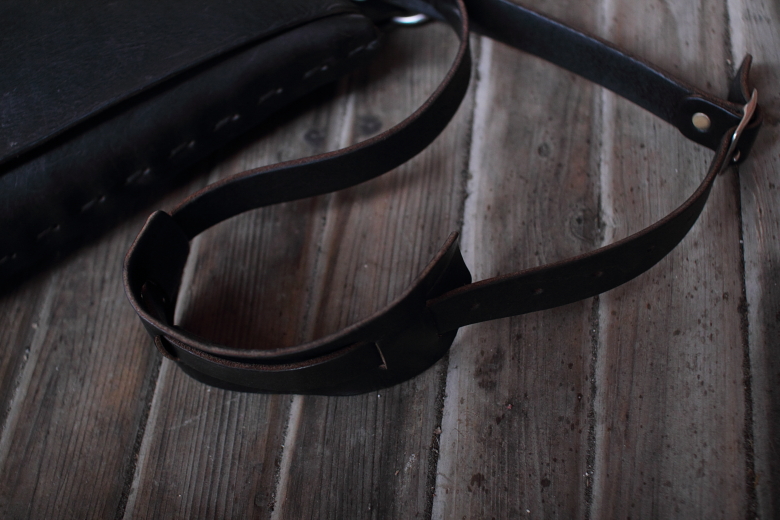
Billy Kirk not only creates classic bags, belts, wallets and hats but is run by a pair of charming brothers who preach The Wardens mandate BUY LESS-BUY BETTER.  Their pride in their product is infectious as seen in this promo video.  What a pleasure to see quality pieces conceived, designed and produced in America with love and care.


Thursday, January 26

YES PLEASE

This is beautiful packaging design. These tortas have been manufactured since 1910 in a small village near Seville, Spain.  Hand flattened and individually wrapped in wax paper, the company still uses the original recipe of the founder Ines Rosales. Delicious, light, crisp, and all natural. You can find these in a variety of flavours at Fiesta Farms.


Wednesday, January 25

TOMAZ JARDIM


Tomaz Jardim is a professor of history at Ryerson University specializing in the World Wars, the Holocaust and modern Germany. His first book, The Mauthausen Trial: American Military Justice in Germany, was recently published by Harvard University Press.  He will be hosting a book launch at The Emmet Ray on Wednesday, February 15.


Tuesday, January 24

SNOW DUSTED LAVENDER


Lavender is a hardy and beautiful groundcover and can be used for numerous complaints, from acne to shingles and including hangovers:

An infusion of Lavender tops and blossoms can help in a number of ways; it will calm that frightful throbbing, soothe the digestive system, assist the liver to cope, and generally boost the jaded system and the lowered spirits.

Griggs, Barbara. The Green Witch. London : Random House, 1993.


Monday, January 23

TO THE INTELLIGENCE OF THE WORKING CLASSES

To a cleaner, simpler life.

I've been without shampoo for approximately 6 months. My scalp had always been problematic; Head and Shoulders became the only product I could use that provided relief.  Suspecting the use of shampoo as the problem, not my scalp, I decided to eliminate such harsh and unnecessary chemicals from my bathing ritual. With some research, patience (there is a bit of a transition period where the oils re-adjust), and pulling inspiration from Ruth Goodman of Victorian Farm I've converted to using this basic recipe : 

Combine 1 cup warm water with 1-2 tablespoons baking soda.  
Combine 1 cup warm water with 1-2 tablespoons of apple cider vinegar and a few drops of essential oil (cedarwood has been my winter scent of choice)

Apply baking soda mix to wet hair, rub into scalp and through hair, let sit for a few minutes, then rinse. Repeat these actions with the apple cider vinegar rinse.

Here is some more information about going shampoo free.

Below are excerpts from Mrs. Antonette Matteson's self published guide to better health, The Occult Family Physician and Botanic Guide to Health. The images are taken from a reprint, but the original was published in 1894.   An interesting look into the Victorian's relationship with their hygiene. The dedication is wonderful and still very relevant today.

Sunday, January 22

MISS L CRAINE


These millinery samples were made by Miss L Craine of Manchester, England in the 1940s.  Sewing  patterns, reference images and course notes were also included in the box where these artifacts were found.  It seems that Miss. L Craine attended school in the 40s and later taught at the Oldham Municipal School of Arts & Crafts in the 1960s.  We found some report cards giving such evidence. Grant Heaps, a fellow collector of antiquities, purchased this treasure in Vancouver's lower east side.   His house will be featured in the Tuesday Interiors post on the 31st.


Friday, January 20

WEDDING ON THE COMPOUND


Last spring I was a bridesmaid.  The bride requested we wear grey to match the band of ribbon around her waist.  Finding something, semi-formal, and in such a colour was next to impossible.  Out of desperation I purchased this dress for $1 at Vintage 69 on Bloor St.  I joked around with the other girls that this is what I was would be wearing - polygamist chic.  I decided against it, but have grown very fond of this piece.  It actually hangs quite nicely on the body.