Thursday, January 15

ARKEN


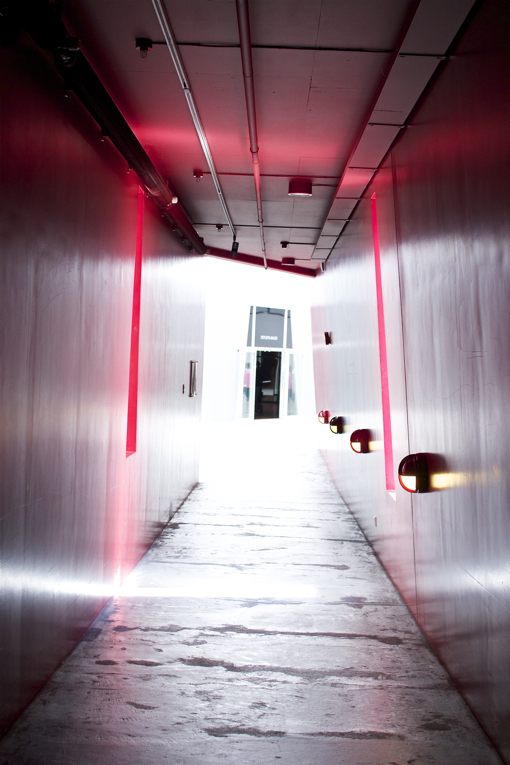
The Arken Museum of Modern Art sits adjacent to a man-made beach just south of Copenhagen. Designed by Søren Robert Lund, the industrial structure is designed to echo its surroundings by looking like a giant beached ship.  The doors opened to visitors in 1996 with the vision that "a visit at Arken should add a new perspective to the visitor's life, making the individual wiser about himself and therefore life."  With permanent installations devoted to Damien Hirst, Anselm Reyle and Ai Weiwei, the Arken strives to explore themes surrounding our place in the modern world as well as the very definition of art. 

The most fun and interactive exhibition of the Arken was The Model by Palle Nielsen.  First mounted in 1968 at the Moderna Museum in Stolkholm, Nielsen created an environment for children to both play in and develop through painting and building.  Considered well ahead of its time, The Model allowed children to interact on their own terms in the hallowed museum halls.  Suitable for children 3-12, the child I had in tow was perhaps a bit young for the experience, but still looked charming in the foam pool.




Tuesday, January 13

WEDDING AT WATERVALE


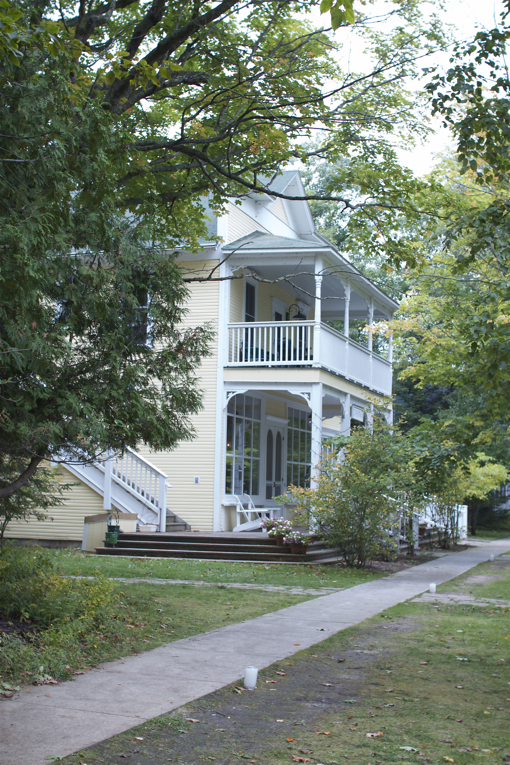
This past September I attend the wedding of Amanda and Paul at the Watervale Inn in Michigan. Reminiscent of Kellerman's resort from the movie Dirty Dancing, Watervale has been a family meeting place since 1918.  Amanda has fond memories of annual summer visits with her family, making it the perfect venue for their nuptials.  

Watervale started as a logging town in the late 19th century.  As industry left, the place was all but abandoned until 1917 when Oscar H. Kraft purchased the town and surrounding land to create a public resort.  Oscar's niece Vera Noble took up the reigns in 1960 and ran the place until her death in 2005 when it was passed along to her children.  The site offers both a main Inn and 20 cottages for rent, some dating back to the original Watervale logging days. 

Everything about the venue dates it to a 1980's renovation, maintained in pristine condition.  It holds a wholesome rugged vibe while at the same time providing resort luxury.  Even though, at the main Inn, the bathroom facilities are shared and the elderly receptionist crotchety, the linens are beautifully pressed, light fixtures dust free, and the windows in my private corner room could be opened to let the warm fall breeze through.  The waitresses in the dining room wear crisp white uniforms, bringing items from a breakfast menu without limits on how much can be ordered.  The breakfast was included in the extremely affordable cost for lodgings and cream for the coffee came in mini glasses, a wonderful old-timey touch.  

There was a late night walk to the beach, guided by candle lanterns leading us to a bon fire blazing in front of crashing waves.  Fireworks were set off, the bar was always open, natural beauty everywhere, and love in the air.  I felt so honoured to be included in such a magical weekend and to experience this very distinctly American getaway.


Sunday, January 11

PIET HEIN


My friend Trelawnie recently gutted a storefront building at Gerrard and Woodbine.  The original state of the place was grim to say the least and I was amazed to see what she had accomplished in few months and with a limited budget.  Once the finishing touches are complete perhaps she'll allow a full feature, but in the meantime, here's an interesting story about her dining room table.

The table came with books.  Better books than bugs.  The Danish designer, Piet Hein, was also an author, mathematician, and inventor (and married 4 women).  Apparently the table could not be sold without these books.

At first glance this table seems typically midcentury, but on closer examination you notice the curved metal edge and the wonderful expanse of white unblemished by the central seam so often seen in similar models.

The books contain poems that Hein called Grooks (Gruk in Danish).  Written during the Nazi occupation of Denmark in 1940, the short poems often offer a cryptic political or social message. They offer a glimpse into the mind of one of the 20th century's most interesting thinkers.

 Art is this: art is the solution of a problem which cannot be expressed explicitly until it is solved. -Piet Hein